
MEDICINAL SEED PLANTING TIPS

Updated: Feb 1

Many medicinal plant seeds are still “wild” seed, meaning that they maintain the unaltered genetic integrity, attributes and ancestral memory of their ancient plant kin.
Many of these seeds are herbaceous perennials, which simply refers to a long lived plant that dies back to their roots each winter to come back in the spring year after year. They typically have cleverly adapted “germination inhibitors” within their seed makeup that assures the longevity of the plant species by having an extra layer of discernment for the right conditions for germination.
Don’t get discouraged from growing one of these plants from seed because it may need a bit more coaxing to break its seed dormancy with big fancy terms like “scarification or stratification” Seeds and plants need three things in order to grow; sunlight, water and soil/nutrients. Most of the time, if the plants are getting at least 2 of these things, it will grow along just fine. Try not to get in your head about it and embrace the spirit of perpetual uncertainty, joy, failure and triumph inherent to the process.
Most of the plants will grow along just fine in pots or containers. A quick jostle through the recycling bin will get you what you need, so long as there are holes put in the bottom of the container for good drainage.
Particularly once established, these plants do not want or need to be coddled. The medicinal depth and potency of a plant is produced as a direct reaction to its environment. When a plant is a little “stressed” they respond with complex and highly potent constituents that benefit the plant, land and humans who are working with it. Coddled medicinal plants may look really good, but it’s all for show. I call it “foofoo” plant medicine.
Be patient and realistic with your perennial seeds growth. Often times, they can seem quite small for the first few years because much of their growth is happening within the root systems underground. This is an extremely practical allocation of resources for the plant, they are making sure that they are well rooted and established before making a big show of their resource intensive leaves and flowers.
Investing in growing seeds and plants is worthwhile. However, whether you’re a seasoned grower or just starting out, it’s so important that we are first and foremost resourceful with our growing techniques and not quick to jump on the consumer bandwagon. Try poking through the recycling to repurpose containers into pots (always making sure we’re putting drainage holes in the bottom, of course), connect with neighbors, local farms or gardening groups in your area to see if someone/somewhere can spare some soil, seed, pots, cuttings, fertilizers, etc.
I promise, if you are even remotely motivated to, you will be able to find all that you need by asking around, especially if you are willing to share the resulting plants in return!

What the heck is Stratification, Scarification and Light Dependent Germination?
Cold conditioning or stratification is a fancy way of referring to how gardeners mimic the cold, wet conditions of a long winter, and help the seed to break out of it’s germination inhibitors to enhance overall germination rate. For reliable results, place seeds in a plastic baggie with moist sand in the fridge for a few weeks to a month before sowing. Alternatively, you can sow seeds in pots or trays in the winter to be left outside or direct sow seed in the garden in the fall/ winter. This is very easy to do but can have a more varied germination result.
To scarify a seed refers to when we help to break down the extra hard seed exterior so that when we water our precious seedlings, the interior of the seed is more easily penetrated for a more consistent germination. This can be done with nicking seed with a small knife, rubbing seed over a bit of sandpaper or soaking seed in water for a few hours to overnight to enhance germination.
Light dependent germinators or surface sowing, refers to seed that requires exposure to sunlight to germinate as opposed to being completely covered with soil. These seeds are typically very small and need to be surface sown to have successful germination. We can do this by preparing pots or flats with soil and sowing seed directly on top and covering very lightly with sand so that the seed to still have access to light but not be washed away when we water them.
Medicinal Seed Planting Tips:
These tips highlight the seed varieties that we are offering from the farm this year. However, the techniques can be utilized for a large variety of medicinal and wild seeds!
In general, seeds like to have soil that is light (without any big sticks, stones etc), with good drainage. The soil does not require having a high nutrient content to get seedlings going as the seeds contain all that they need until about the time they get their first true leaves. At this time, they will benefit from a bit of nutrients/fertilizers being added to the soils they are being transplanted to or can be foliar fed with amendments made at home or bought from the store.

Echinacea
Echinacea’s germination rate is enhanced with a bit of cold conditioning or stratification, which mimics the cold, wet conditions of a long winter, and helps the seed to break germination inhibitors. For reliable results, place seeds in a plastic baggie with moist sand in the fridge for about a month. Alternatively, you can sow seeds in pots or trays in the winter to be left outside or direct sow seed in the garden in the fall/ winter. The latter is the easiest method though has more sporadic germination results. Plant seed about the same depth as the seed is long in late winter/ early spring. Cover and tamp securely. Keep moist until germination begins. If cold conditioned, they will begin to germinate within a few weeks of consistently warm soil temperature. If not cold conditioned, germination will occur though is typically more sporadic.
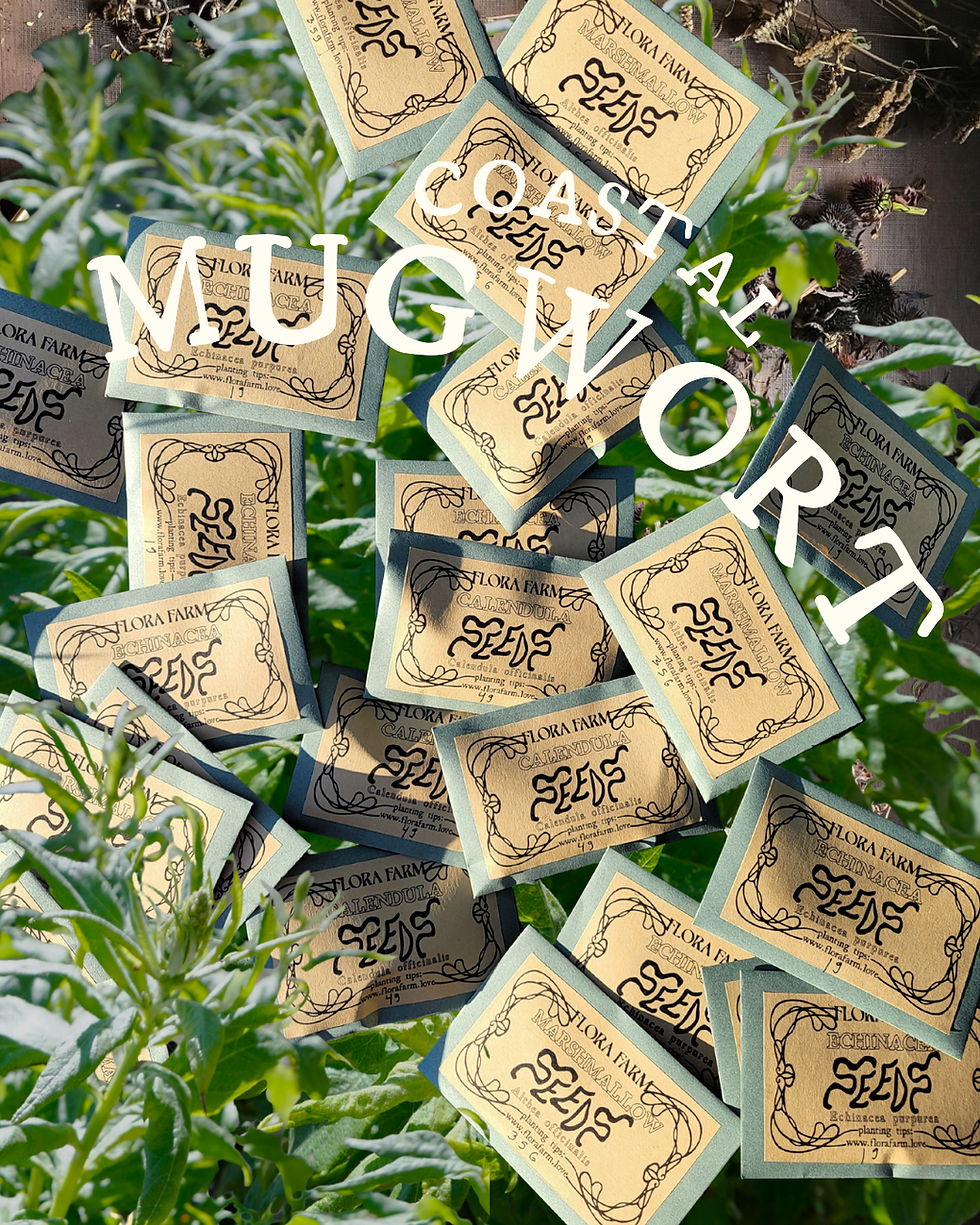
Coastal Mugwort
Mugwort seed requires to be surface sown and exposed to sunlight to germinate, it's known as a "light dependent germinator". Though not necessary, mugwort seed germination can be enhance with cold conditioning. Sow seed in late winter/early spring and cover lightly with sand (this helps the seed to still have access to light but not be washed away when we water them in) and tamp down securely. Keep evenly moist until germination occurs, typically within 2-3 weeks.

Calendula
One of the easiest plants to grow from seed, Calendula germinates willingly in pots and a variety of different sites and soil conditions. Once the soil starts to warm up, sow seeds about the same depth as the seed is long in pots or directly in prepared garden soil. Cover and tamp securely. Keep moist until germination begins, which typically occurs within 1-2 weeks. Calendula is an annual that can tend to have short lived perennial growth in temperate climates.

Hyssop
Hyssop seed is known as a “light dependent germinator”, which means that the seed requires to be “surface sown” and exposed to sunlight to germinate as opposed to being completely covered with soil. Hyssop seed is small and can be easier for some folks to mix the seed with a bit of sand before sowing. In the later winter/ early spring, prepare pots or flats with soil and sow hyssop seed directly on top. Cover lightly with sand (this helps the seed to still have access to light but not be washed away when we water them in) and tamp down securely. Keep evenly moist until germination occurs, typically within 1-2 weeks.

Marshmallow
Marshmallow’s germination rate is enhanced with either soaking the seed in water over night or by “scarifying” them which can be done with sandpaper or a small knife. When we do either of these techniques, we help to break down the extra hard seed exterior so that when we water our precious seedlings, the interior of the seed is more easily penetrated for a more consistent germination.
Marshmallow germinates best in cooler to moderate temperatures. Plant seed about the same depth as seed is long in late winter/early spring. Cover and tamp securely, keeping moist until germination begins. Germination typically occurs within 2-3 weeks. If not soaked or scarified, germination may take a bit longer and be more sporadic.

Yarrow
Yarrow seed is another light dependent germinator, so it needs exposure to sunlight to germinate and shouldn't be completely covered with soil. Yarrow seed is small and can be easier to mix the seed with a bit of sand before sowing. In the later winter/ early spring, prepare pots or flats with soil and sow yarrow seed directly on top. Cover lightly with sand (this helps the seed to still have access to light but not be washed away when we water them in) and tamp down securely. Conversely, you can direct surface sow seed in prepared garden soil. Keep evenly moist until germination occurs, typically within 2 weeks.

This plant is not to be utilized as medicine but as a natural dye plant. It is very easy to grow and i've had it thriving in low nutrient areas around the garden. It blooms it's head off as a lower mounding shrub with bright yellow aster flower. Once in the dye pot, it produces a vibrant yellow for natural dyeing. Surface sow in spring and keep moist until germination.

Comments